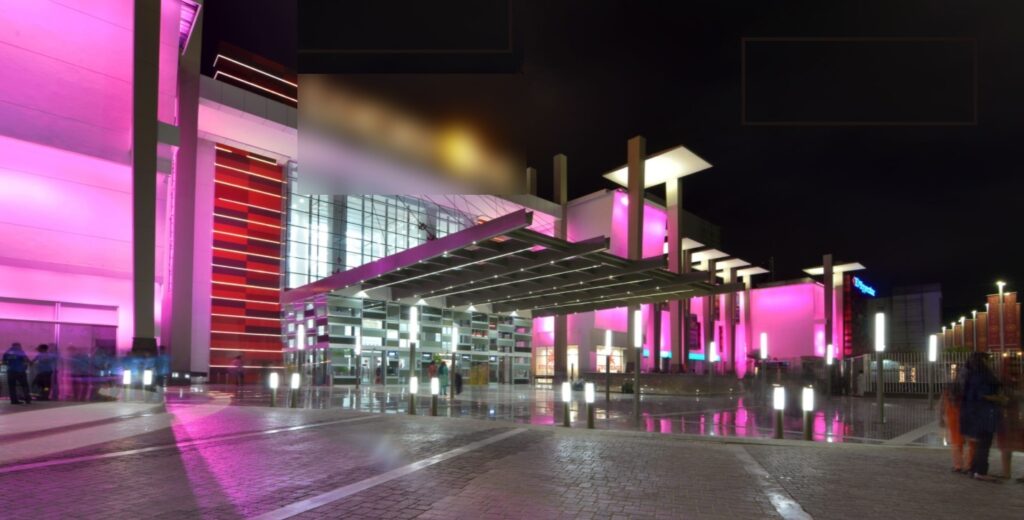
The recent fire at Karachi’s Gul Plaza has once again drawn attention to the critical importance of fire safety preparedness in commercial buildings. While investigations continue and facts are still being assessed, such incidents serve as a reminder that fire safety is not just about emergency response—it is also about planning, prevention, and responsibility.
At Grow Safe, our focus is not to be a part of the blame game or sensational reporting. Instead, we aim to highlight practical fire safety lessons that can help shopping malls, plazas, and large commercial buildings reduce risks and protect lives. It’s, therefore, a moment to reflect, learn, and improve safety preparedness.
Common Causes of Fire in Shopping Malls
Based on industry experience and fire safety audits, most large-scale commercial fires are triggered by a combination of factors, including:
- Electrical short circuits caused by poor wiring or overloaded systems
- Use of flammable decorative or retail materials
- Improper storage of combustible goods such as textiles, plastics, and paper
- Unauthorised electrical modifications at individual establishments
- Lack of functional fire detection and suppression systems
In high-footfall commercial spaces, these risks multiply rapidly if early intervention systems are missing or non-functional.
Why Fire Safety Systems Fail
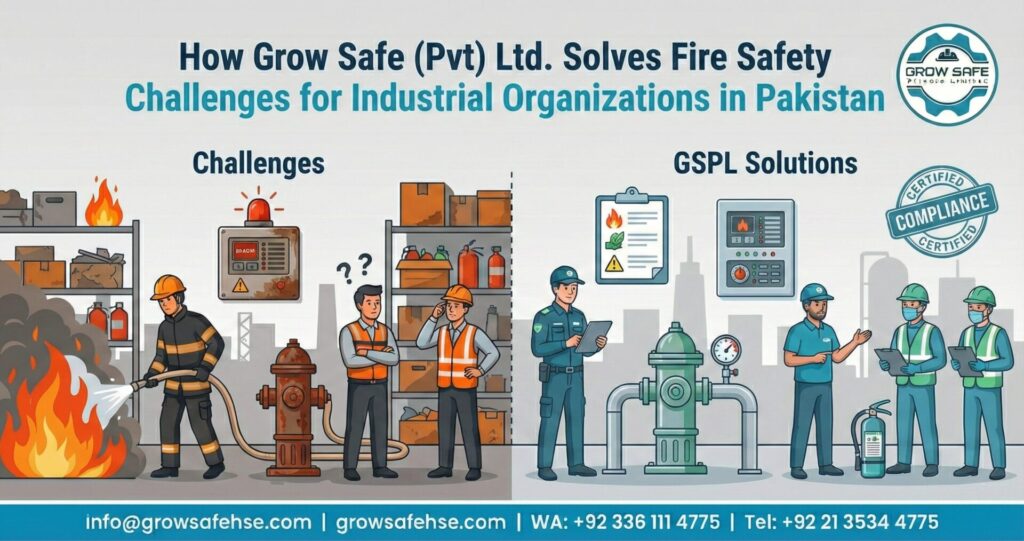
Many commercial buildings have basic fire equipment installed, yet failures occur due to:
- Fire vehicles not being fully operational or adequately supplied with water or fuel
- Insufficient response time during the initial critical minutes
- Lack of trained firefighting crews and safety staff
- Inactive or poorly maintained fire alarms, sprinklers, and extinguishers
- Unstructured evacuation plans or drills
According to the international standards, such as those of the National Fire Protection Association (NFPA), emergency response should be within minutes. Delays beyond this window allow a fire to grow uncontrollably due to continuous combustion reactions.
Understanding Fire Behaviour in Commercial Buildings
Fire is a continuous chemical chain reaction involving fuel, heat, and oxygen. In technical terms, it is a reduction-oxidation (redox) reaction that does not stop on its own.
There are only three effective ways to control a fire:
- Cooling – reducing heat (usually using water systems)
- Smothering – cutting off the oxygen supply
- Inhibition – interrupting the chemical reaction using appropriate agents
In commercial buildings, most fires fall under Class ‘A’ fires (ordinary combustibles like wood, fabric, paper, plastic) coupled with electrical fires. Without immediate control measures, fires can quickly reach temperatures exceeding 500°C, making late-stage water application ineffective.
Essential Fire Safety Measures
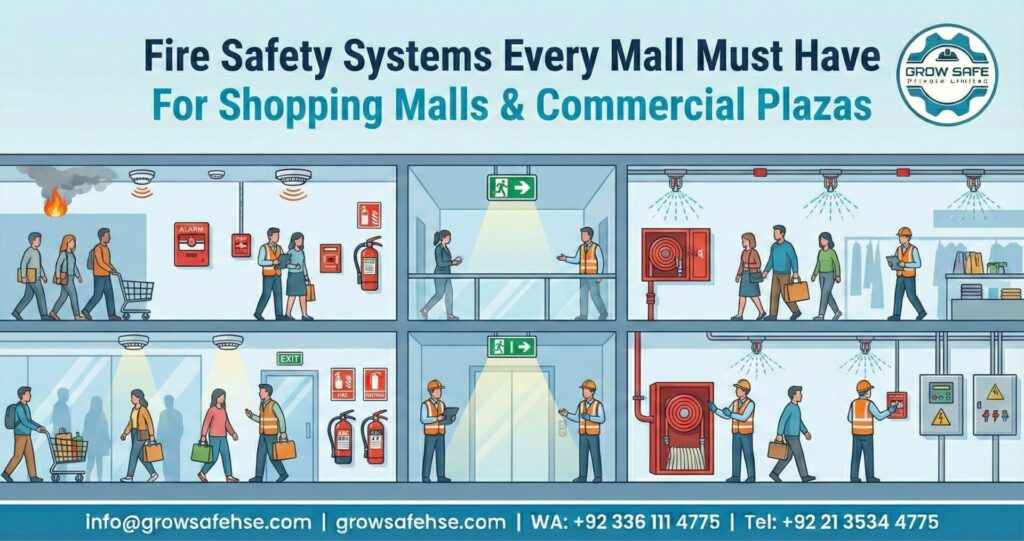
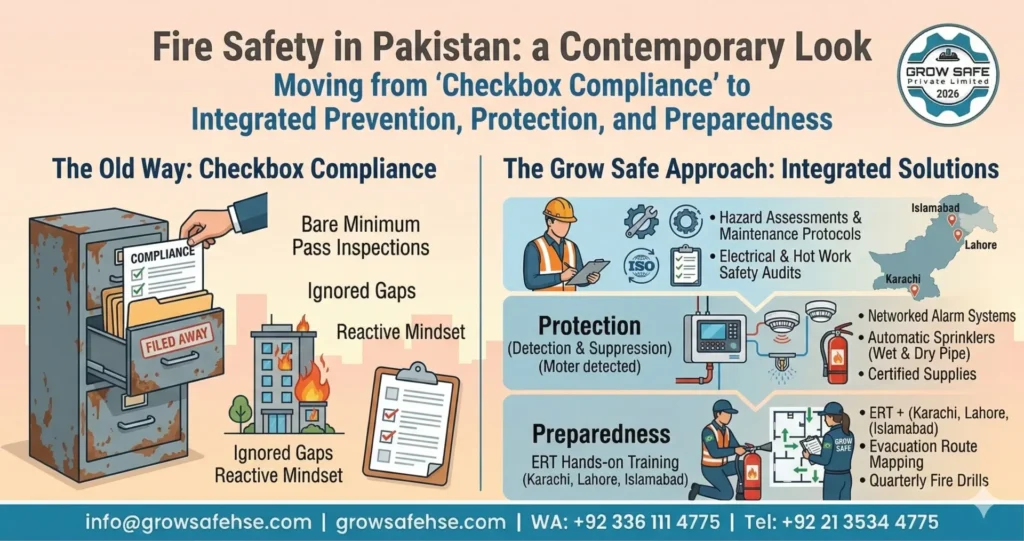
To prevent similar incidents, commercial buildings must implement a layered fire safety strategy, including:
- Properly designed fire detection and alarm systems
- Functional fire suppression systems (sprinklers, extinguishers, hose reels)
- Clearly marked and unobstructed emergency exits
- Reliable power isolation systems for electrical fires
- On-site trained emergency response teams
- Regular inspection and testing of all fire safety equipment
Fire safety must be integrated into the building’s operational culture, not treated as a mere formality.
Importance of Regular Fire Audits & Training
Fire safety systems are only effective when they are regularly audited and supported by trained personnel. International best practices emphasise:
- Routine fire risk assessments
- Fire audits aligned with NFPA and OSHA standards
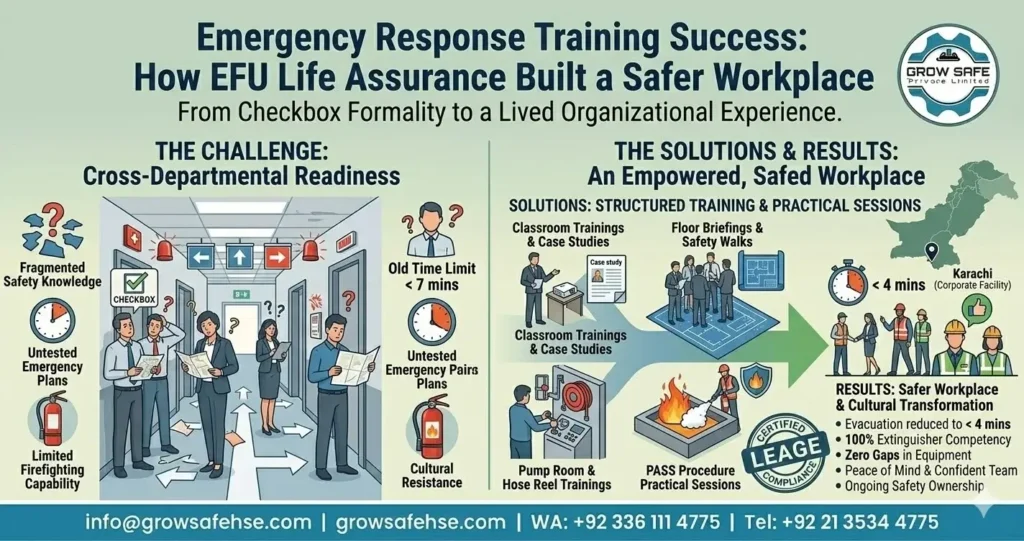
- Staff training on evacuation and emergency response
- Mock drills to ensure readiness under real conditions
Untrained public involvement in rescue efforts is never a substitute for professional emergency response and is, in fact, discouraged under global safety standards.
Responsibility and Prevention: A Shared Obligation
Fire safety is a shared responsibility involving:
- Building administrators and owners
- Regulatory authorities
- Facility management teams
- Business occupants and shop owners
True prevention takes place when stakeholders understand their roles and move beyond reactive approaches. Waiting for a building to collapse or combustibles to burn out is not fire management—it is a plain and simple failure.
Grow Safe’s Commitment to Fire Safety Excellence
At Grow Safe, we believe that lives are saved through preparedness, not reactiveness. Our fire safety services, audits, training programs, and certified equipment are designed to help commercial buildings meet international safety standards and prevent avoidable disasters.
Fire incidents should not only be reported—they should be learned from.
Final Note
Fire safety is not an option; it’s mandatory.
By investing in proper systems, audits, and training today, commercial buildings can protect lives, property, and the future of our cities.