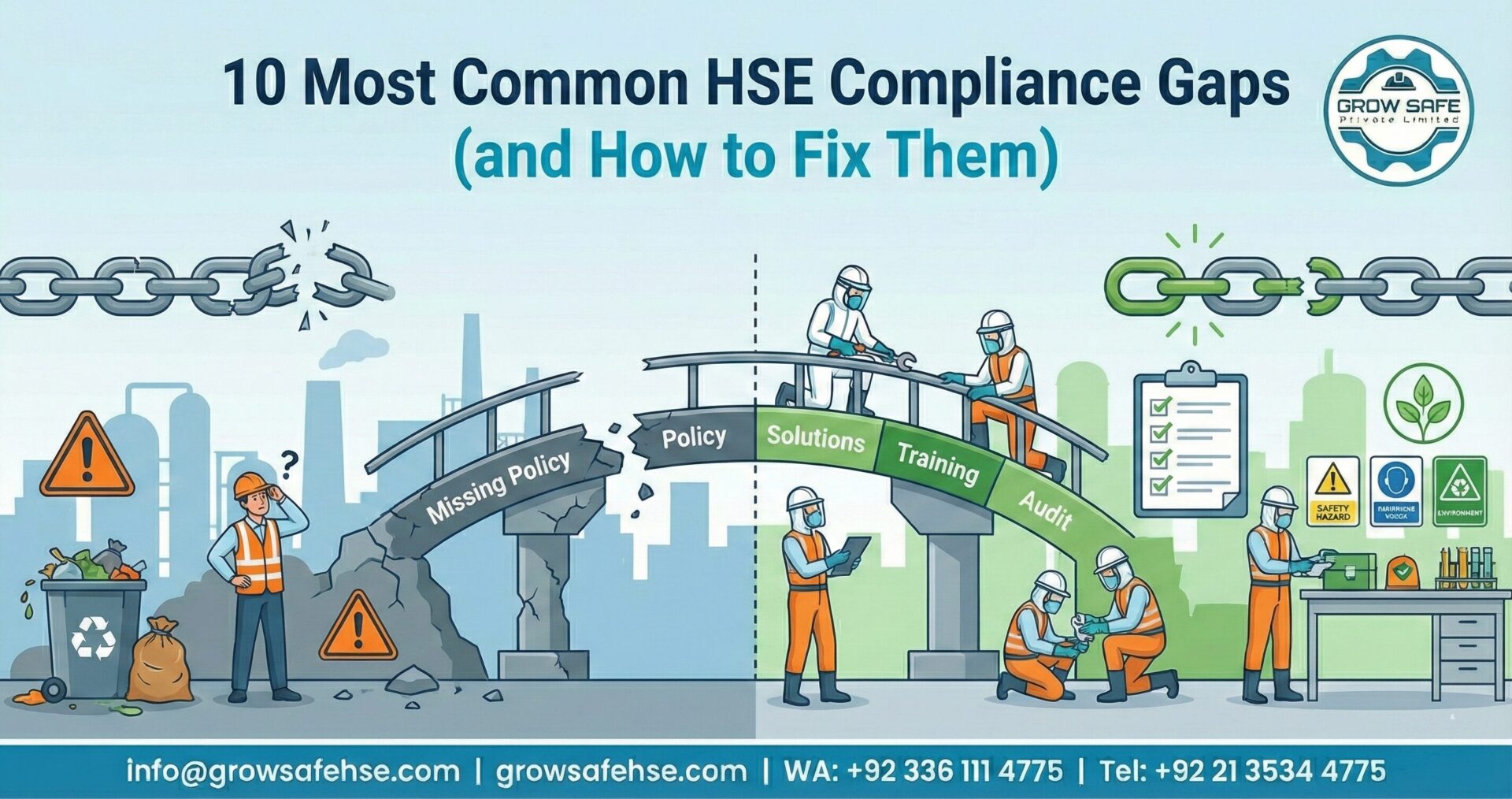
Health, Safety, and Environment (HSE) compliance is more than a regulatory requirement — it’s the foundation of a safe, productive, and sustainable workplace. Yet, many industrial sites in Pakistan still face recurring HSE compliance gaps that can lead to accidents, penalties, and reputational damage.
At Grow Safe, we help organizations identify, assess, and close these gaps through our specialized HSE consultancy services, technical audits, and training programs designed to strengthen safety culture and compliance across all levels.
That said, let’s look at the 10 most common HSE compliance gaps, with suggestions for a quick fix.
1. Lack of Documented HSE Policies
Many companies lack updated, written safety policies aligned with ISO 45001 and local regulations.
Fix: Develop clear HSE manuals, SOPs, and communicate them during employee inductions.
2. Inadequate Risk Assessments
Most sites conduct risk assessments only once a year or after a safety incident.
Fix: Schedule quarterly reviews and detailed risk mapping for every department.
➡️ Explore our Technical Services for professional risk assessments.
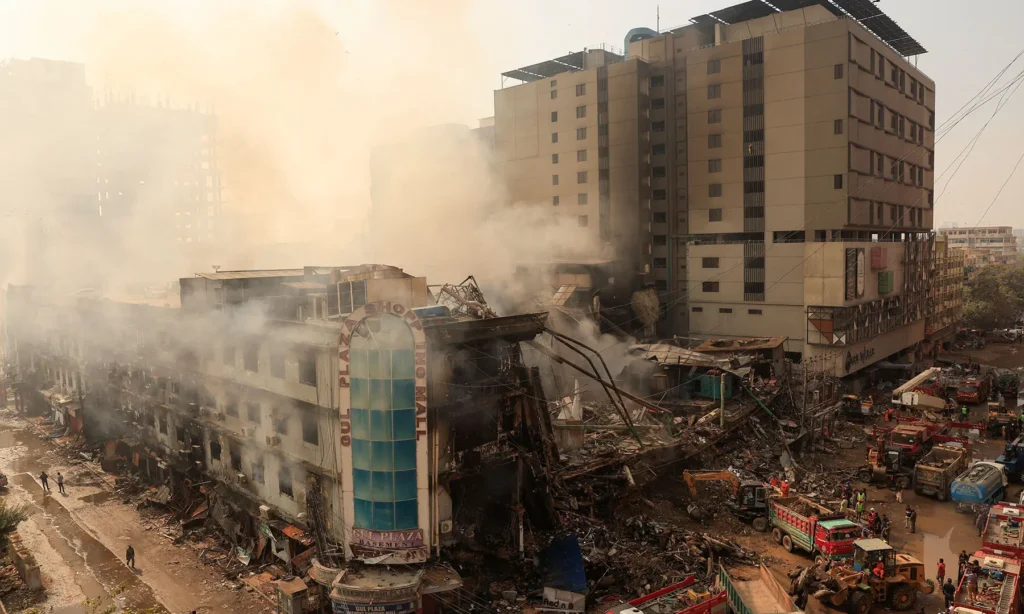
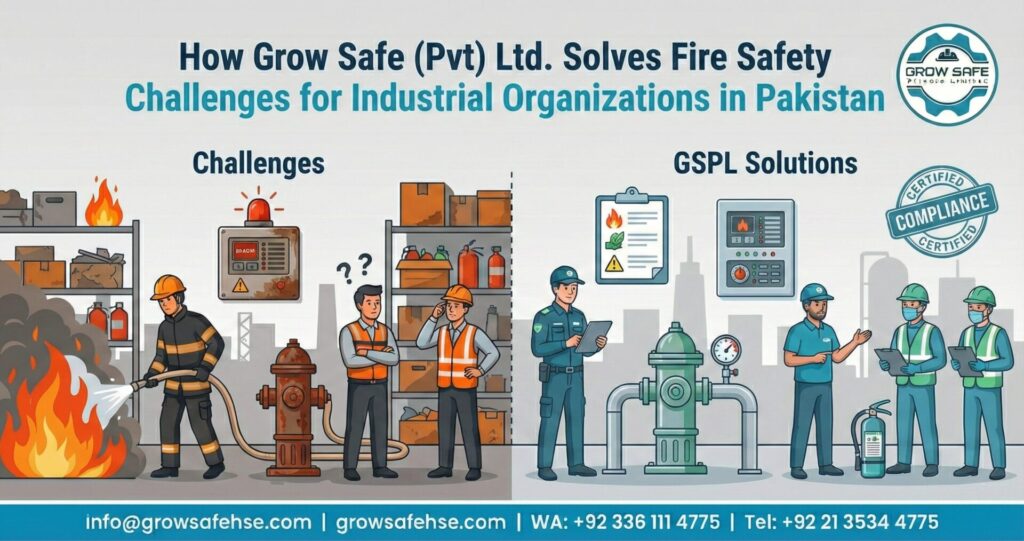
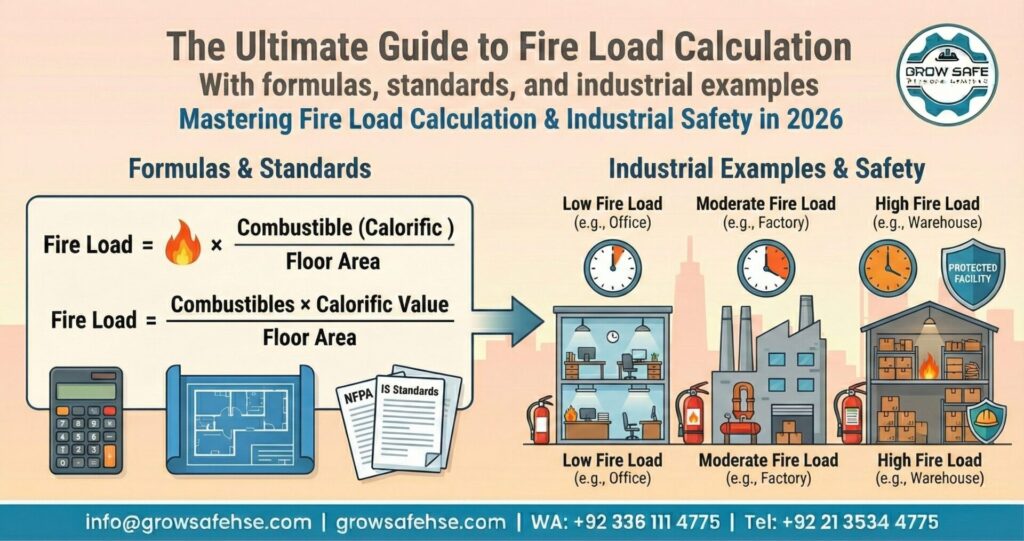
3. Poor Fire Safety Readiness
Unmaintained extinguishers, faulty alarms, and missing fire drills are common issues.
Fix: Conduct regular fire safety audits and mock drills to ensure readiness.
4. Missing Permit-to-Work Systems
Unauthorized hot work, confined space entry, or maintenance without permits often cause serious hazards.
Fix: Implement a digital or manual Permit-to-Work (PTW) system with proper authorization controls.
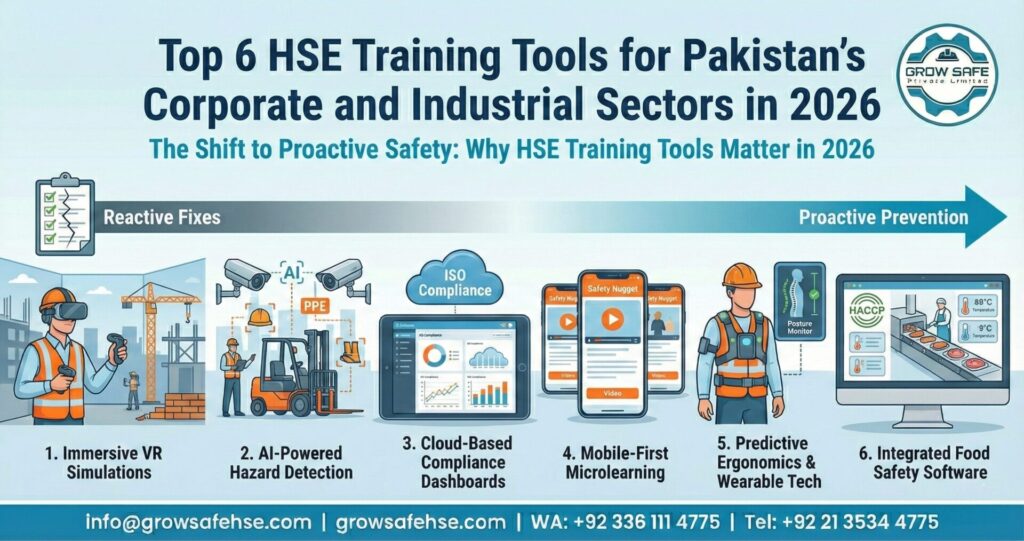
5. Weak HSE Training and Awareness
Untrained staff are a hidden liability. Many organizations only train supervisors, ignoring workers.
Fix: Conduct periodic HSE and fire safety trainings covering hazard identification, PPE usage, and emergency response.
➡️ View our Training Services.
6. Outdated Emergency Response Plans
Emergency procedures are rarely practiced or displayed.
Fix: Update ERP documents annually and conduct drills every 6 months. Display evacuation maps and contact lists at visible points of the workplace.
7. Incomplete Incident Reporting and Investigation
Accidents often go undocumented or analyzed superficially.
Fix: Use structured root-cause analysis tools like the 5 Why’s or Fishbone Diagram for thorough analysis. Maintain proper records for audits.
8. Lack of Workplace Hygiene and Environmental Controls
Factories often neglect dust, noise, and air-quality monitoring.
Fix: Schedule regular industrial hygiene surveys and environmental assessments.
➡️ See how our Technical Services support compliance.
9. Non-Compliance with ISO Standards
Many organizations are unaware of updates in ISO 45001, 14001, and 9001 requirements.
Fix: Perform a compliance audit with a certified HSE consultant and integrate corrective actions.
External resources:
– View all Legal Requirements of Pakistan
10. Inadequate Monitoring and Leadership Commitment
Safety KPIs are rarely reviewed by management, leading to weak accountability.
Fix: Set measurable HSE goals, conduct management reviews, and track performance on a monthly basis.
Some More Effective Fixes
- Conduct a comprehensive HSE Gap Analysis twice a year.
- Assign dedicated safety officers trained in compliance management.
- Integrate safety audits, fire risk assessments, and environmental monitoring.
- Use digital tools to record, track, and report safety observations.
HSE compliance is not a one-time activity — it’s an ongoing effort tied to workplace culture. By addressing the 10 common gaps, organizations in Pakistan can significantly reduce risks, improve productivity, and build a reputation for reliability and responsibility.
If you’re unsure where to begin, experts at Grow Safe can help you identify and resolve the compliance gaps in your organization through detailed audits, technical inspections, and tailored training. Let’s give it a start!